A photograph preserves a travel memory, but beautiful buildings stand beside people, working staff and a city’s everyday life. A good picture does not require making others participate in your outing. Before shooting, consider the venue’s rules and the effect on people. Taking a photo and publishing it are separate questions that should not be decided automatically.
Check the place’s rules first
A museum, station, private interior or guided visit may have its own restrictions. Read signs and admission conditions or ask a staff member whether photos, flash, tripods or certain subjects are allowed. An admission ticket does not authorize all equipment. Our museum visit guide helps check before entry.
Do not transfer one venue’s rules to another. If the answer is unclear, delay the photo and ask instead of hiding the camera. At sensitive sites and inspection areas, check the instructions of the responsible services. Someone else taking photos nearby is not proof of general permission.
Ask the person clearly
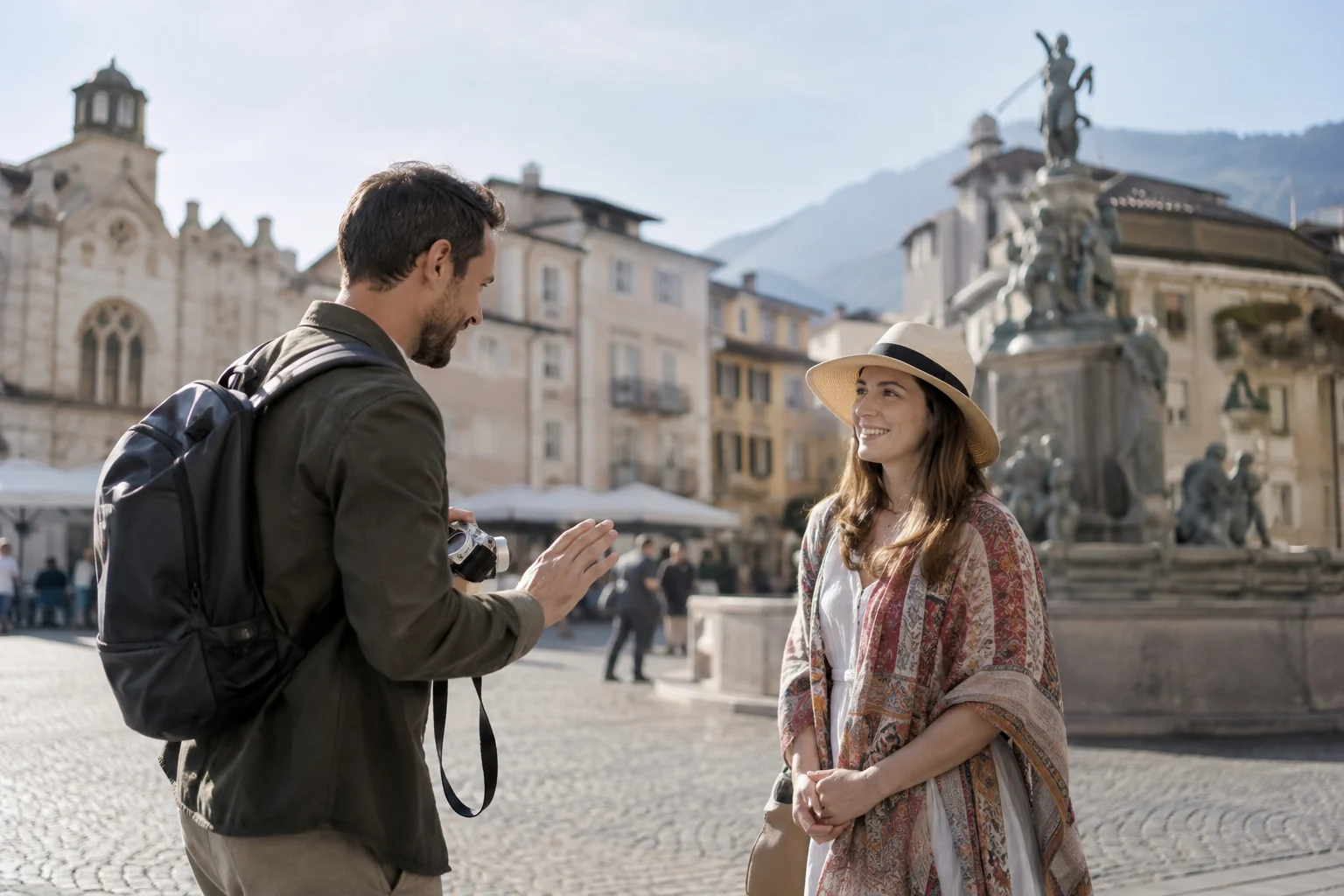
If a person will be the main subject, calmly explain what you want to photograph and ask permission. Showing the camera may help, but a gesture does not replace a clear question. Explain whether it is for personal use or sharing. Accept refusal without argument or secretly repeating the shot.
Be especially considerate with children and people in vulnerable circumstances. Do not turn another person’s difficulty into a publishing opportunity. Staff handling boarding or checks do not have to pause for a portrait. If language is a barrier, our short travel questions guide helps.
Avoid obstructing movement and work
Stand where you do not block doors, stairs, boarding or pedestrians. Do not step into the road for an angle or ask the crew to delay a coach. Bags, tripods and a stationary group also take space. If there is no safe position, skip the shot or take it later.
Photography during a technical stop does not override crew instructions. Do not enter staff-only areas or wander away for a picture of the coach. On a short walk, the return deadline matters more than another image; our walk between coaches plan explains this.
Check what appears in the picture
Before sending, enlarge the image and inspect the background. It may contain someone’s screen, document, accommodation address, ticket QR or a child’s details. Crop unnecessary information or choose another photograph. Even a picture of your own table with tickets can reveal information you did not intend to publish.
Permission to pose is not universal permission for every distribution method. For recognizable faces and publication, check applicable rules and the agreement, especially if audience or purpose changes. Specific context matters more than “anything is allowed outdoors.” If uncertain, do not publish the person without further clarification.
Select photographs after the trip
Choose a small number to keep and separate them from working document images. For family sharing, use an agreed audience, review album access and avoid unnecessary location tags. Do not automatically send the entire archive. If someone asks you not to distribute a picture, review copies and sharing you control without promising to erase others’ saved files. Respect begins before pressing the button and continues when deciding what remains personal and what you share.
← Back to the journal