
At the border, it helps to explain your actual plan clearly: where you are going, why, where you will stay and how the journey continues or ends. This is not an eloquence competition or a memorised answer guaranteeing entry. Preparation helps you find information without confusion. Decisions depend on applicable rules and the individual's documents, not a ready-made phrase online.
Describe your real purpose
Write the purpose in your own words: visiting relatives, a holiday, work or another actual reason. Do not substitute a convenient story. Different activities may require different permissions, so check whether your document fits what you intend to do. A ticket alone does not authorise employment or long-term residence.
Distinguish the coach destination from your final address. Include onward travel to another city if that is your plan. Our EU and Schengen comparison helps avoid confusing itinerary countries with the territory of the applicable rules.
Match dates and evidence
Check that coach, accommodation and planned return dates agree. An overnight journey may finish on the next calendar day. If plans change, update relevant information and retain valid evidence instead of adapting an explanation to an obsolete reservation.
Officials may request accommodation evidence, an invitation or information about returning. The list depends on circumstances. The official EU guidance directs travellers to the destination's consulate for precise requirements. Our supporting-document guide helps organise what you have.
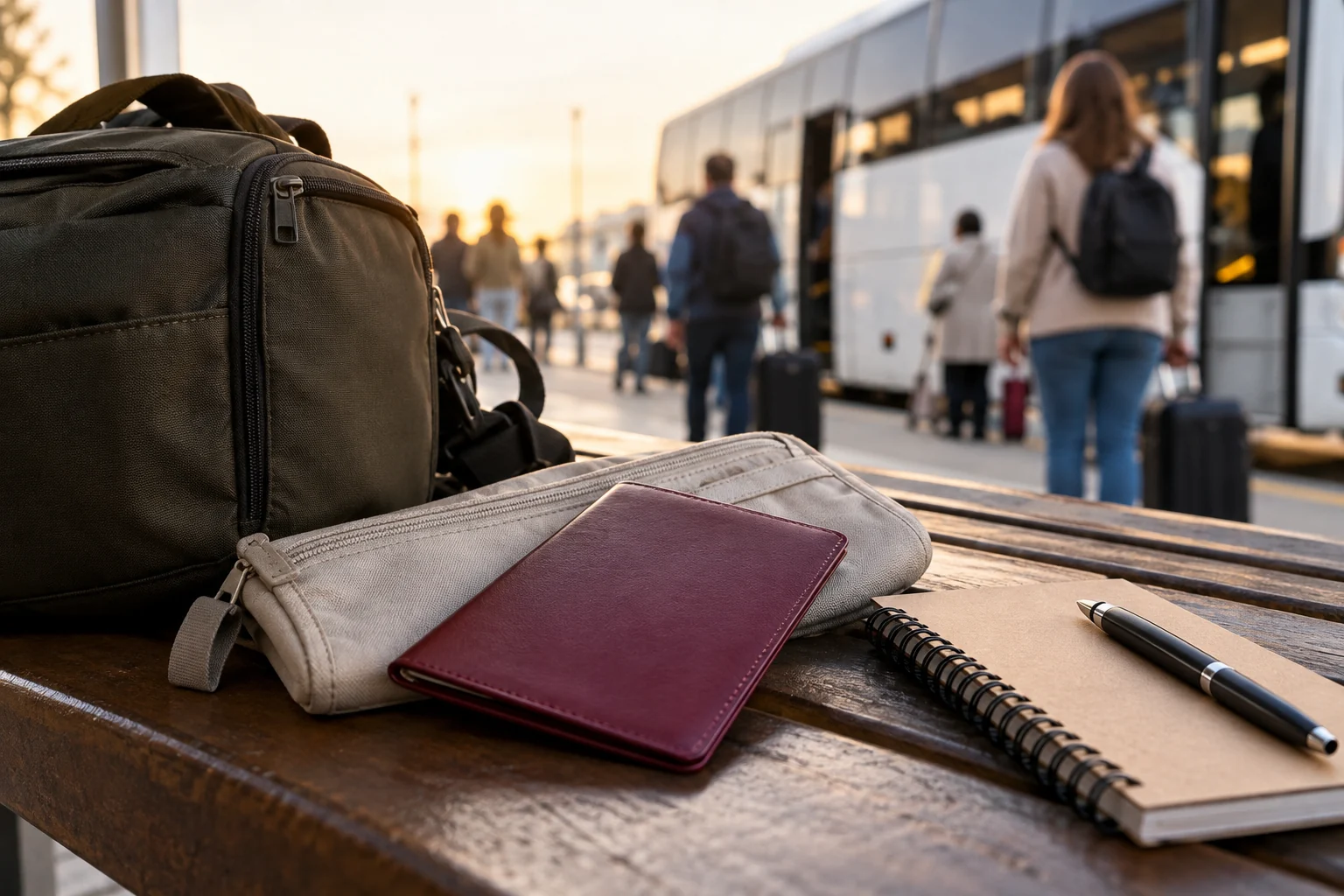
Make necessary information accessible
Save your host's address and contact for use without a network. When staying with acquaintances, obtain the actual name, address and reachable number rather than asking for invented evidence at the last moment. A contact does not mean that person must answer every question for you.
Keep documents in a clear order. A short personal itinerary can help, but it does not replace originals or a required evidence format. If a question concerns one address, locate that information first rather than displaying an entire private message history. Share only what is relevant to the request.
Answer a question you understand
Listen to the whole question. If you do not understand the language or wording, ask for repetition or an accessible explanation. Do not automatically agree with an unclear statement or add details you cannot confirm. If using a translation, check that it conveys your own plan rather than changing its meaning.
Family members may have different documents and grounds for travelling. Discuss the shared itinerary without distributing an identical memorised story. An adult should know their purpose and address even when a relative booked everything. Prepare the required information and documents for minors under the applicable rules.

Allow for changes to the journey
Checks and further questions prevent a guaranteed departure time from the border. Follow officials' and crew instructions about waiting and returning. Do not leave the coach based on your own estimate of the stop's duration.
For a separately booked onward leg, check change conditions in advance. Our travel contact plan helps inform people waiting for you. Preparation means accurate information and accessible documents, not buying someone else's answers or a promise of unrestricted admission.
← Back to the journal