
Buying an international coach ticket arranges carriage, but does not independently create entry or residence rights. Even a valid visa does not mean automatic admission for any purpose or circumstances. Passengers benefit from two parallel checks: whether the booking matches the journey and whether documents satisfy applicable rules. This helps avoid discovering a problem only after paying for several consecutive services. Your Europe (EN).
Separate carriage from the border decision
The ticket concerns route, date, passenger, luggage conditions and other booking details. Border requirements concern citizenship, travel document, status and entry circumstances. These remain different matters even when the carrier asks to see a passport at boarding. A coach employee's check is not the competent authority's decision.
Do not treat an operational payment button or booking confirmation as assessment of your entire immigration position. Preparing an electronic ticket helps organise the carriage document. Check border requirements separately with official authorities rather than inferring them from a seat being available for sale.
Check your document and status
Use official guidance for your citizenship and specific grounds for travelling. For third-country nationals, Schengen entry conditions are not limited to showing a visa or ticket. Short stays, residence and other situations may differ; do not apply one list to every traveller.
Compare document validity and condition, applicability of the visa or permit, dates and status restrictions. Check entry counts or permitted stay separately rather than relying on a friend's account. Do not consider a passport copy a full substitute for the original. In a complex situation, ask an official question before buying, sharing only necessary information through a verified contact.
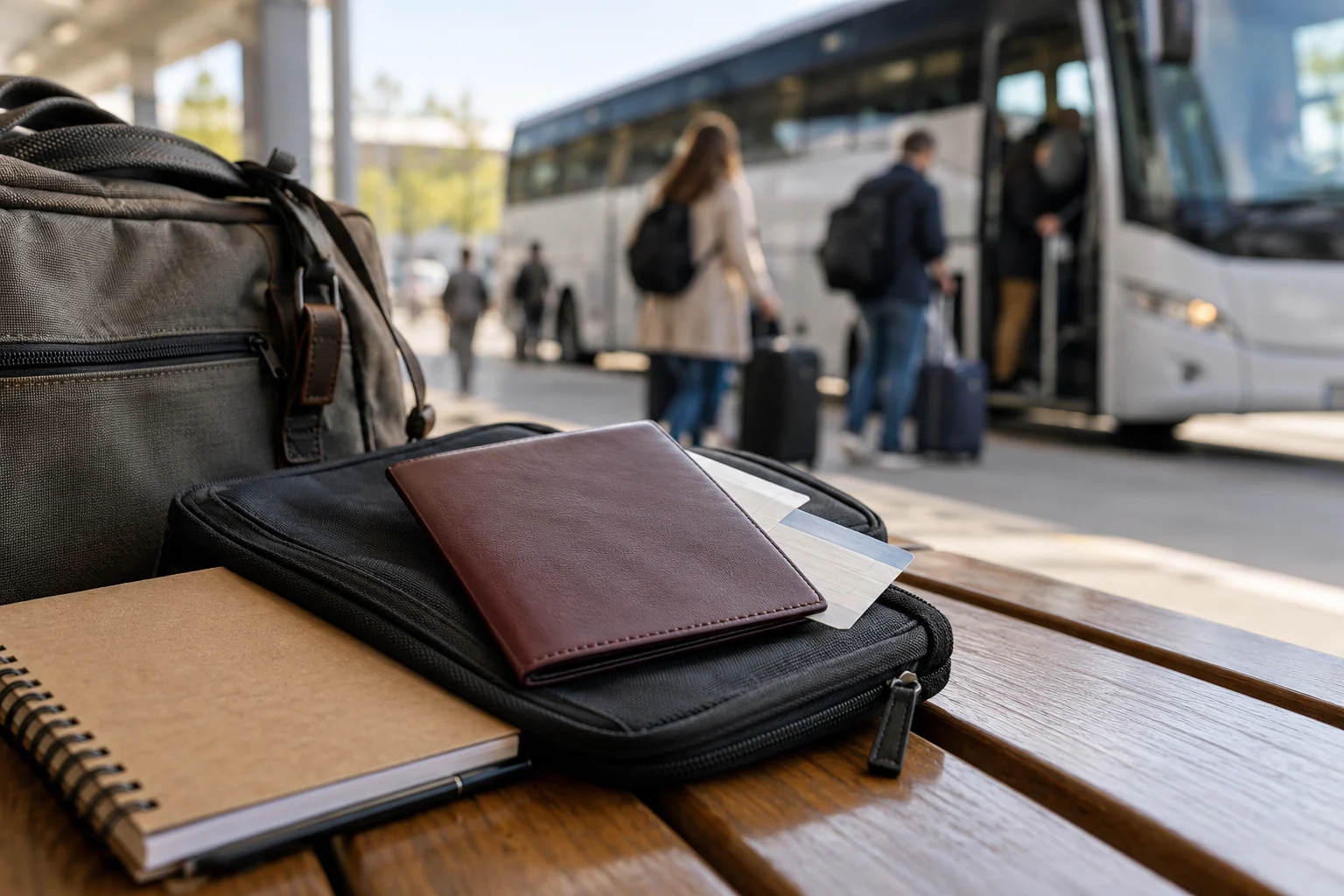
Check the purpose and whole route
Write down transit countries and the coach's actual route. Permission for the final country does not always answer conditions on each intermediate section. Travel through a non-Schengen country needs assessment separately from a journey remaining inside the area. The shortest map route does not confirm the service's actual path.
Clarify which evidence of purpose and travel conditions applies to you and how to show it. Save current accommodation, invitation or other supporting information if required under your rules. Do not create a fictitious reservation or explanation simply to assemble formal papers. Documents should match the real plan rather than a sample from a random chat.
Compare the checked plan with the booking
After checking the grounds for travel, compare date, passenger name and stops with the ticket. A name error and lack of entry rights are separate problems requiring different enquiries. The carrier may explain booking correction, but its sales service does not replace the authority determining border conditions.
Checking a ticket error helps gather purchase information. If changing the route for a connection, check documents for the new journey again. Do not assume a paid return ticket automatically resolves every official question or guarantees a favourable decision. Keep confirmations accessible and protect personal information when sending them.

Recheck changes before departure
Before travelling, consult current official notices and specific carrier arrangements. Rules, document status or actual route may have changed since purchase. The absence of routine internal-border checks does not remove applicable document requirements; allow for possible checks in travel arrangements.
If a problem emerges, clarify it with the competent service and review ticket cancellation or change conditions separately. Refusal of entry requires retaining the decision and contacts rather than hoping another purchase fixes everything. A workable outcome is an honest plan and appropriate documents, with the understanding that a ticket and visa alone are not admission guarantees.
← Back to the journal