
Two neighbouring sections of a coach journey can have different border implications. An external border involves entering or leaving Schengen; an internal one separates participating countries. This distinction supports preparation, but it does not predict how long a stop will last or whether your bus will be checked. Plan documents and onward commitments around the actual route rather than someone else's previous experience.
Mark borders on the actual itinerary
First obtain the selected departure's countries, transfers and any vehicle changes. The origin and destination names do not reveal every transit country. Mark each departure from Schengen and re-entry, even if most of the journey connects participating states. The EU and Schengen comparison provides the geographical background.
Check the return journey too. Another bus may use different countries or connections. If the seller announces a route change, reassess your documents and permitted entries. Save the clarification with the date and selected service details so it cannot be confused with a general description of the direction.
Check your entry basis at an external border
The documents depend on nationality, purpose and status. A short visit and a return under residence documentation may involve different conditions. A passport, visa and residence card serve different functions. Check their combination, validity and recognition with the competent authorities rather than relying on a ticket alone.
Applicable registration systems can also affect the procedure. The official EES information (EN) confirms full operation from 10 April 2026. That does not mean every traveller is covered without exception: check your category and the documents supporting any exemption separately.
Keep documents nearby within Schengen too
The word internal is not a promise that there will be no checks. States can temporarily reintroduce border control. The Commission's notification list (EN) helps check countries and dates before departure; an old screenshot does not establish today's arrangements.
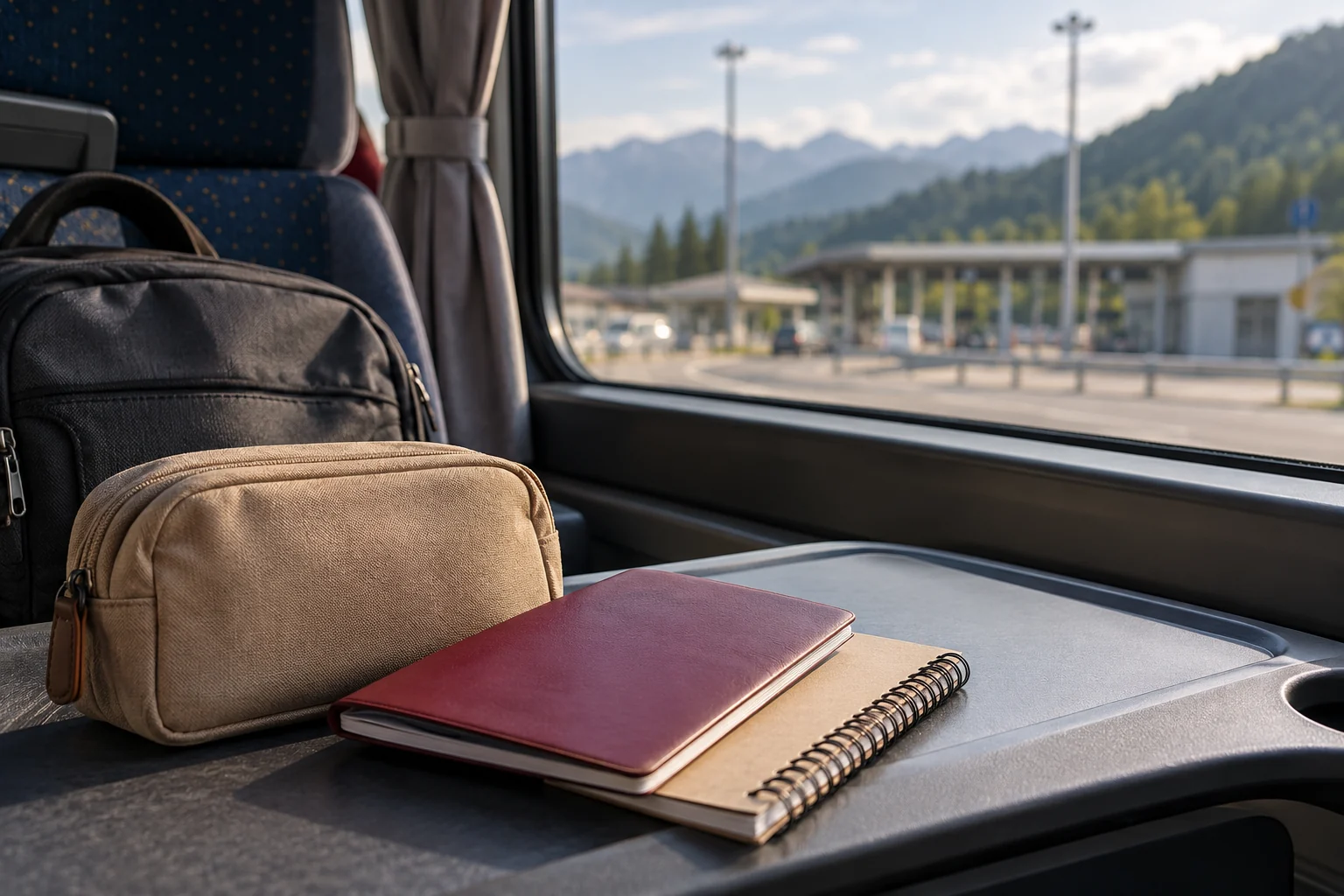
Carry required originals in an accessible hand bag rather than a suitcase already placed in the luggage hold. Follow the crew's and authorised officials' instructions. Do not leave the coach just because passengers from another service have done so: the procedure for your stop may differ.
Do not turn border time into an exact forecast
A timetable cannot promise a fixed number of minutes at the border. Queues, document checks and traffic organisation can affect the entire service. When planning a train, work commitment or meeting afterwards, consider the consequences of late arrival and have a realistic response to changes.
Do not assume that a familiar driver can guarantee an individual's document outcome. Ask the competent authority about your status in advance, and the carrier about communications and actions during a delay. The travel contact plan helps coordinate with relatives without promising a precise crossing time.

Recheck changes before departure
Review the route, original documents and current official notifications. With a single- or double-entry visa, account for departures from the area and re-entry; checking visa entries explains the relevant fields. One transport purchase does not turn separate border events into a single entry.
Save seller and authority contacts, and keep explanations concerning your case with your documents. Ask again if the route or dates change. Good preparation means understanding your basis of travel and the procedure; it does not remove border authorities' powers or guarantee clearance.
← Back to the journal