
An accommodation name and map pin do not always explain where to go after leaving the bus. The confirmation may list the property address, key collection location and manager's contact separately. Check these details before travelling, especially for a late arrival. Save clear directions and contacts, and compare accommodation arrangements with the booking confirmation.
Find the full address in the confirmation
Open the booking confirmation and record the city, street, building number and additional details supplied by the host. Check the property name and stay dates. If the address is only shown after a particular booking stage, follow the service's procedure for obtaining it. Do not invent an address based on a similar name.
Compare the written address with the map location. A discrepancy requires clarification rather than guessing the most convenient option. Save the original street spelling: translating a name can sometimes make it harder to find. Short travel questions help you prepare an understandable request when communication is difficult.
Clarify the entrance and key collection
Ask whether the entrance matches the map address and where check-in takes place. Reception, the apartment and key collection may not be at the same point. Request an entrance description and necessary actions, but do not assume every property has round-the-clock staff or self check-in.
Check the arrival window and how to arrange an earlier or later arrival. A door code, an instruction and permission for late entry are different pieces of information. Get confirmation for your particular date and keep it available offline. Do not publish access codes in an open chat or public note.
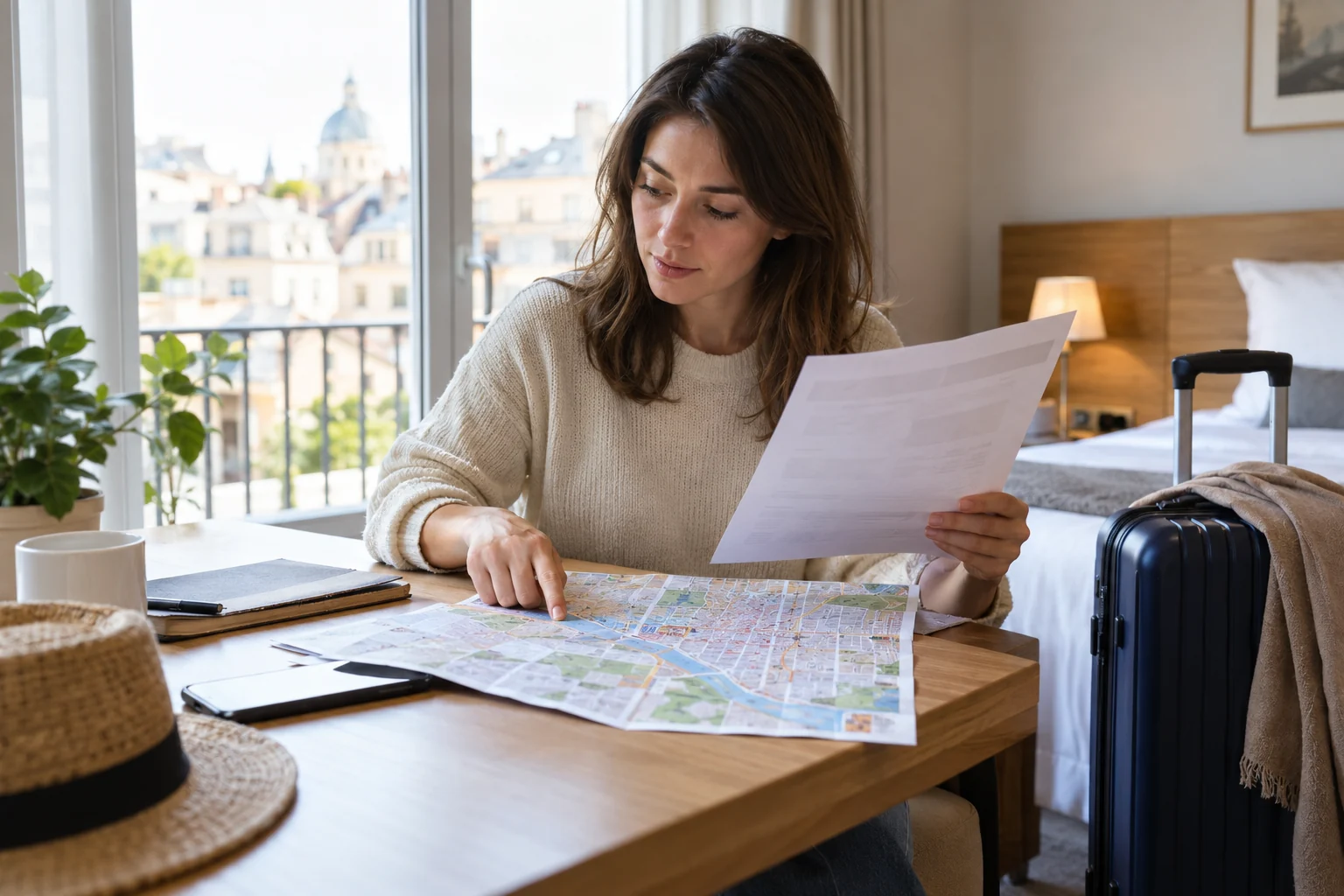
Connect the address with the final bus stop
Establish the exact bus drop-off location, then examine the last part of the journey. A stop named after the city need not be near the centre or your accommodation. Compare walking, local transport and a booked transfer, allowing for your suitcase, timing and companions' needs.
Check suitable transport against official information or confirmation from the chosen provider. Do not count on a route simply because it worked on a previous visit. For late arrival, use the night arrival preparation guide and consider somewhere to wait if accommodation access is not yet confirmed.
Save verified contacts and a backup option
Record the contact method from your confirmation and ask who responds around your expected arrival time. An unread message is not consent to a late check-in. Use the booking channel for clarification and save replies with your documents. Do not send payment or document copies to a random person claiming to be the host in an unrelated message.
If an outside request differs from your booking terms, verify it through the confirmed service or property contact. Clarification does not guarantee the property's safety, but helps prevent mixing up addresses and arrangements. A travel contact plan lets you decide who should hear about a timing change and how to communicate without your usual network.
Check the complete information before arriving
Open your saved files without internet: the address, map, access instructions and contact must be readable. Identify the current version separately if the property has sent an update. In a group, make sure the information is with the person responsible for the final transfer or contact, rather than only on one phone with an empty battery.
Compare the local arrival date with the night booked. If the bus is delayed, send the host updated confirmed information and ask whether access arrangements change. After check-in, keep documents until settlement is complete and do not circulate temporary codes further. Useful preparation ends in understandable actions, not merely a map pin.
← Back to the journal