
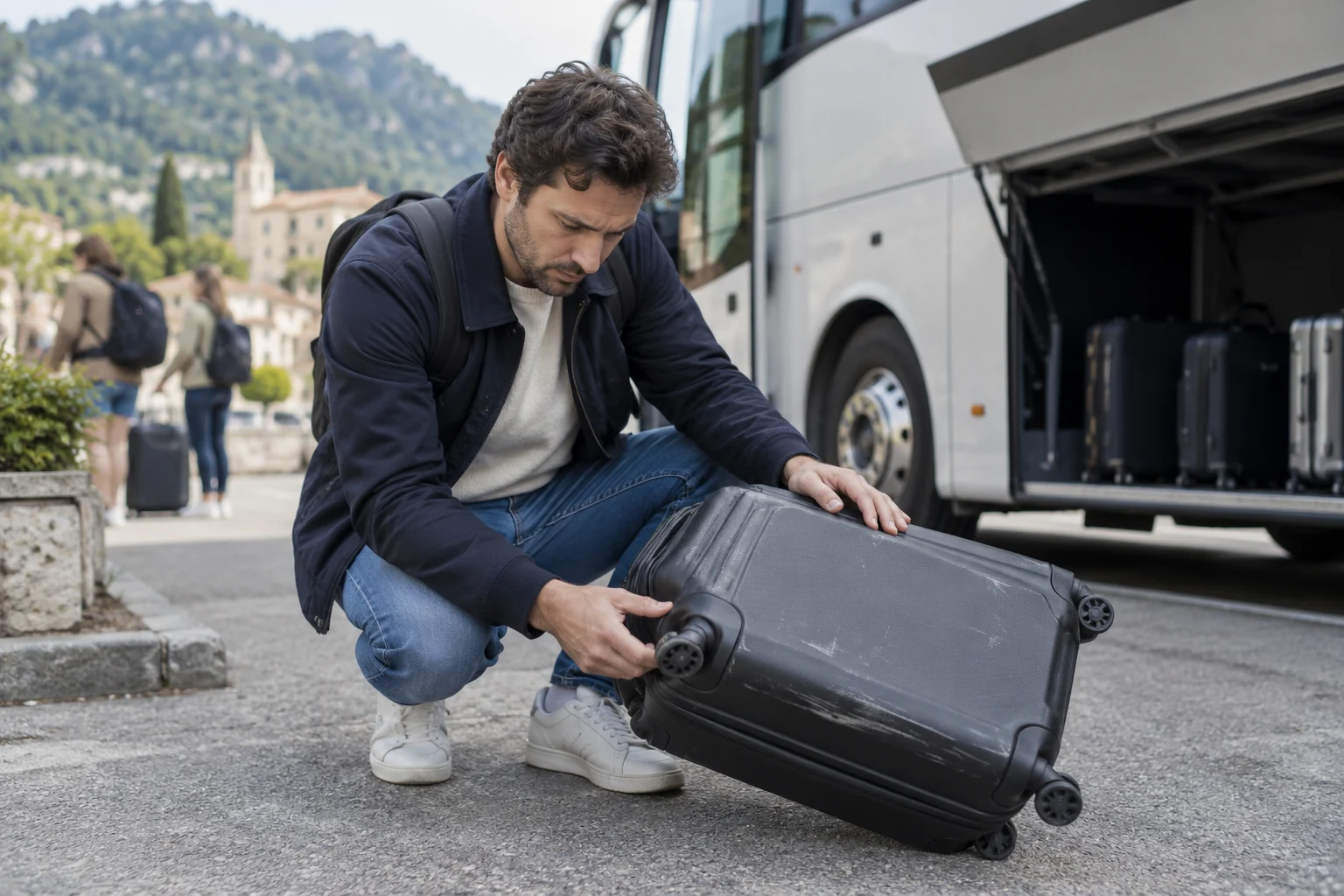
At collection you find a broken wheel, damaged handle or marks on the suitcase. First record the facts and report the problem through the specified procedure. Do not treat every scuff as a guaranteed payment or identify responsibility from one photograph. Condition, discovery time, handover and applicable terms matter.
Inspect the item before leaving
Verify it is yours using the personal label, number, model and features. Inspect the damage in a safe place without obstructing unloading or entering the road. Describe the specific problem to staff: a loose wheel, handle that will not extend or visible crack.
If discovered later, record where and when you noticed it and what happened after collection. Do not replace the sequence with an assumption that it was damaged on the bus. The collection guide helps carry out early checks at the stop.
Take clear photographs
Capture the whole item and separate views of the damaged part from different sides. Show which component is affected rather than an unrecognizable close-up. Keep original files and any available pre-trip images. Do not add an invented date or edit evidence to change the item's apparent condition.
Avoid exposing contact tags, documents or other passengers' faces unnecessarily. Prepare images relevant to official support. If packaging or a cover has visible damage, record it separately without claiming an unconfirmed causal connection.
Keep handover and journey records
Prepare ticket, booking number, date, route and handover and collection stops. Attach any issued baggage receipt or number. If no document was given, explain the actual procedure rather than inventing a record. Retain agreement about unusual baggage and packaging if relevant to the item.
The baggage rules guide explains advance checks of weight, size and terms. For the current request gather the conditions applicable when buying, not just the latest website description. Keep any evidence of the item's value; it does not automatically entitle you to that amount.
Establish how the problem is registered
Notify the crew on discovery, then ask for the official carrier or seller contact. Find out how to register a request, what materials are required and the deadline. There is no universal time limit or documentation method for all countries and tickets. Ask for a case number and confirmation that materials were received.
Read any report before confirming it. Compare description, date and your details. If something is wrong, calmly identify what needs clarification. Do not sign unclear wording just to leave quickly. The travel request guide explains a clear submission structure.
Await the decision with a preserved timeline
Separate facts, documents and the outcome sought. Ask for applicable conditions to be explained if the response is unclear. Reimbursement depends on responsibility, circumstances and law; damage or a receipt alone does not guarantee compensation. Evaluate any repair, replacement or payment offer against the specific response.
Before changing the suitcase's condition, ask whether inspection is required and which evidence is needed for assessment. If repairs are urgent, discuss the procedure and retain costs without assuming they were approved. Keep correspondence until the case ends. A useful request relies on a verifiable sequence and precise description, not a promise of any compensation amount.
← Back to the journal