
The same ticket price does not mean the same luggage rules. The number of items, dimensions, weight and additional charges depend on the carrier and departure. Start packing by reading your ticket conditions rather than applying the allowance from a previous trip. This is especially important with two suitcases, a pushchair or bulky equipment.
Separate belongings into two groups
Hand luggage stays with you in the cabin, while main luggage is usually placed in a separate compartment. Each group can have its own restrictions. Ask how many items are included, which dimensions are allowed and whether a total weight applies to all bags together. If the description is incomplete, send the carrier your suitcase dimensions and item count.
Small size is not automatic permission: there may be no suitable cabin space for a rigid suitcase. A bag must fit in an authorised position without obstructing the aisle. Use an overhead shelf only for items of a suitable size and weight; do not lift a heavy object there merely to clear space around your feet.
Ask about an additional suitcase
Check whether another bag can be carried before paying, rather than only asking the price. Extra luggage may depend on available space, need advance approval or require a separate arrangement. Get a clear answer covering the item count, where to pay and how to demonstrate the agreement at boarding. Keep the correspondence with your ticket.
Measure a suitcase including wheels and projecting handles if external dimensions are required. Weigh it after packing. An estimate of approximately ten kilograms is unreliable when conditions specify an exact limit. For sports equipment, a bicycle or a pushchair, use the separate special luggage guide: an ordinary extra suitcase charge may not apply.
Pack a small cabin bag
A suitcase in the luggage compartment may be inaccessible until a stop or arrival. Move documents, your ticket, phone, charger, water and personal items needed on the way into your hand luggage in advance. Prepare valuable and fragile belongings according to the carriage conditions and keep them under your control. Store medicines that need to remain accessible according to their instructions.
Arrange the cabin bag so you can quickly find what you need. Documents in a separate pocket make boarding easier without unpacking the whole backpack. Seal liquids securely and pack food so it does not stain belongings or create a strong smell. For an international journey, separately check import rules for food and other items: carrier permission does not replace customs requirements.
Before handing over your suitcase
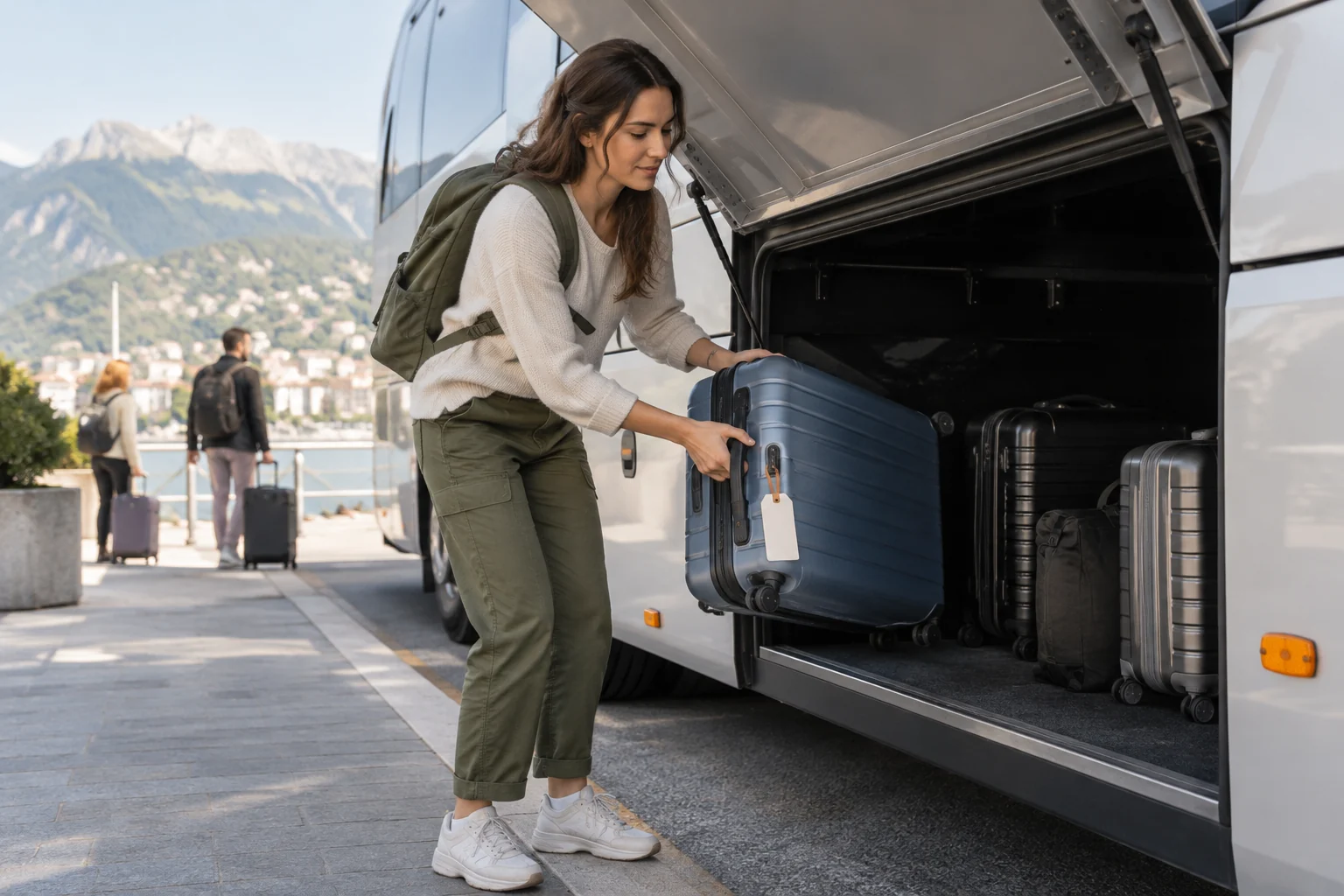
Check zips and fastenings, remove unnecessary hanging accessories and secure loose straps. Add a recognisable luggage tag with contact details that allow you to be reached, without displaying your home address. Photograph the outside: this will help if you need to describe the bag.
At boarding, follow staff instructions, particularly when passengers leave at different cities. If a luggage receipt or tag is issued, retain it. Such a document is not provided by every carrier, so check the procedure for your departure. Do not put belongings into a compartment intended for a different stop without agreement.
When collecting luggage
Compare colour, tag and identifying features before leaving. Similar suitcase models are easy to confuse. If you notice damage or a missing bag, tell staff immediately, record the condition and ask how to report the problem. Keep the ticket, luggage documents and photographs. The lost belongings guide helps assemble information for your enquiry.
Do not assume a standard compensation payment resolves every problem: responsibility and the process depend on the circumstances and applicable conditions. Before travelling, the most useful steps are understanding the rules, confirming unusual items and keeping everything you need before arrival with you.
← Back to the journal