
A small stop may be more convenient than a large coach station, but it often has no ticket office, dispatcher or departure display. A town name in search results does not establish where you can board. Before buying, confirm that the particular service picks up passengers there, then agree on the location and meeting procedure. This matters especially at village edges, junctions and stops on roads between settlements.
Confirm that boarding is permitted
Ask the seller or operator to check your date, direction and stop. A coach may pass through the village without picking anyone up. A technical stop does not count as permission to board either. If advance notice is required, establish whether the booking is sufficient or you must notify the operator separately.
Keep the reply with your order. It should clearly confirm that you can board this service at that location with your ticket. “We usually collect people near the shop” is insufficient without a date and road side. Our guide to route stop types explains the distinctions.
Understand the actual location
Request an address or coordinates, road side and recognizable landmark. Two shelters bearing the same name may serve opposite directions. Ask whether to wait beside the shelter, on a designated area or at another agreed location. A map locates a point but does not establish a safe walking approach.
Check how to reach it with your suitcase: pavement, lighting and a suitable crossing all matter. Do not plan to cross a fast road simply to save distance. If the approach is unsafe or the location remains unclear, discuss another permitted stop. Arrange any boarding assistance beforehand instead of relying on staff at a station that does not exist.
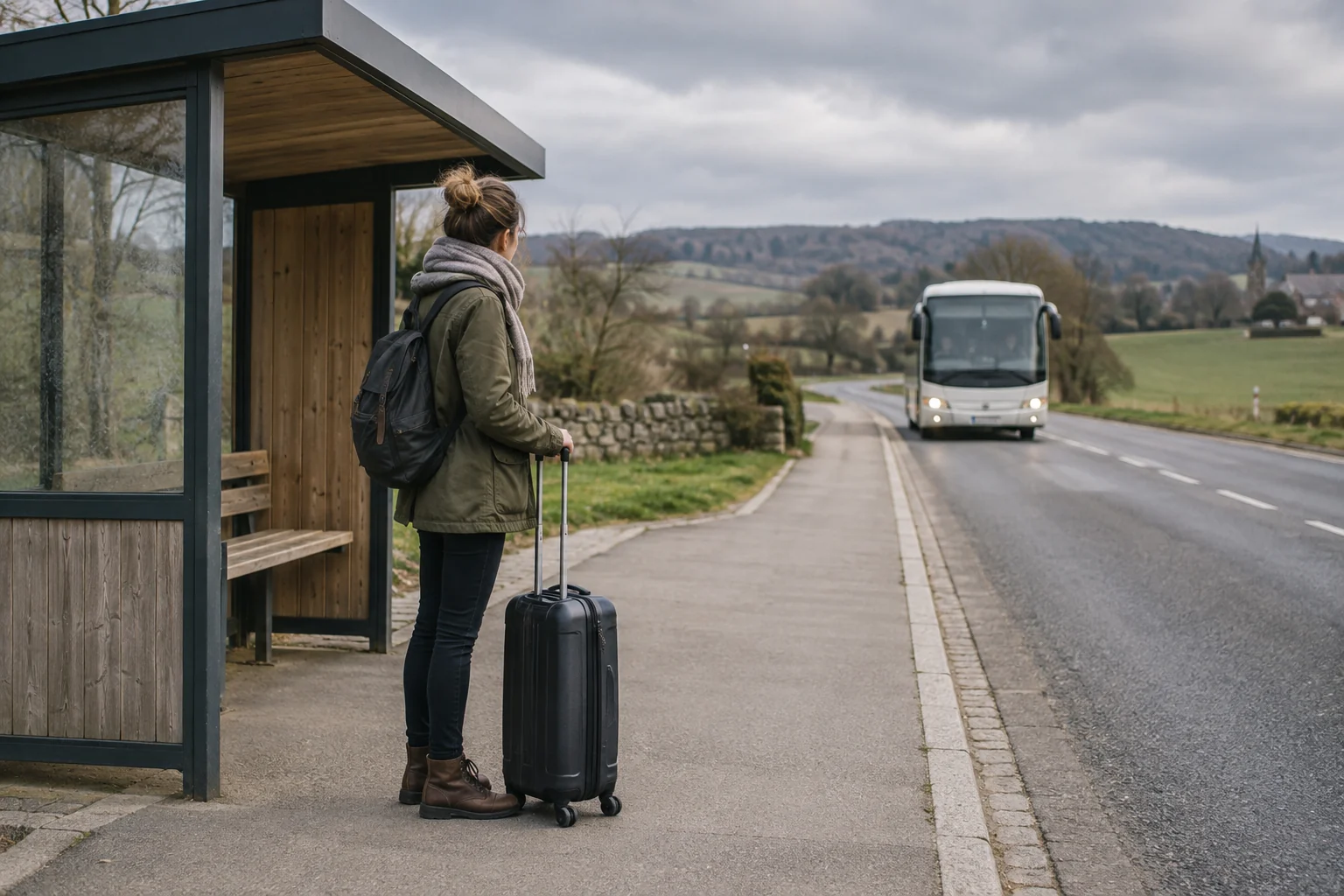
Agree on contact and waiting
Save the contact for your actual service, the way to check its status and the recommended arrival time. Ask how to report that you are waiting if the operator uses such a procedure. A call does not replace a ticket or boarding confirmation. The driver may be unable to answer while driving; use the designated safe contact channel.
The stop may lack shelter, toilets, shops or reliable internet. Bring a charged phone, an offline ticket, water and suitable clothing. If the coach is delayed, use the official contact to check information instead of walking far away on someone else's guess. Our delay action plan helps with that situation.
Prepare luggage and identify the coach
Keep your documents and cabin bag separate from your main suitcase before the coach approaches. Confirm extra baggage, a bicycle or a pushchair and its loading at this particular point. A small roadside area can have different arrangements from a terminal; available hold space does not settle safe loading.
Compare the operator and direction with your ticket, confirm your service with the crew, then hand over your bags. Do not enter the carriageway to flag down a similar-looking coach. The crew determines where to use the door and luggage compartment. Our luggage preparation guide helps separate cabin essentials.
If the arrangement changes
If the coach or pickup point changes, ask for confirmation of the new location, time and a safe way to get there. Do not move to a nearby junction based on a rumor. If the coach passes you, record the time, keep the ticket and correspondence and report your location to the service contact. Do not pursue it or attempt boarding somewhere unauthorized. Establish the facts and available onward option first; responsibility and any remedy depend on the actual circumstances and terms.
← Back to the journal