
A label helps connect a suitcase with its owner, but it does not replace a ticket, baggage receipt or carriage rules. Its purpose is simple: provide a safe way to contact you and distinguish similar items. Prepare minimal details, reliable attachment and another identifying feature before traveling.
Include a working contact
Choose a phone number or email address accessible during the journey. Check the spelling and international number format if crossing a border. You may include a recognizable name without identity-document details. A contact is unhelpful if messages cannot be received for days.
A full home address, passport details, card information and an account of how long your home will be empty are unnecessary for an ordinary tag. If it has a window or cover, use that design for contact details. Do not turn an external label into an exposed collection of personal data.
Make the suitcase recognizable
Several passengers may own the same model and color. Add a visible, safe identifier: your own tag, a short mark or suitable sticker. It must not cover important suitcase parts or become a long loose strap. Photograph the outside and remember features visible without opening it.
For a family, check which identifier belongs to each bag. Matching ribbons alone are not enough: describing a specific item helps if ownership is unclear. The baggage rules guide covers size and weight; labeling has a different task, identification.
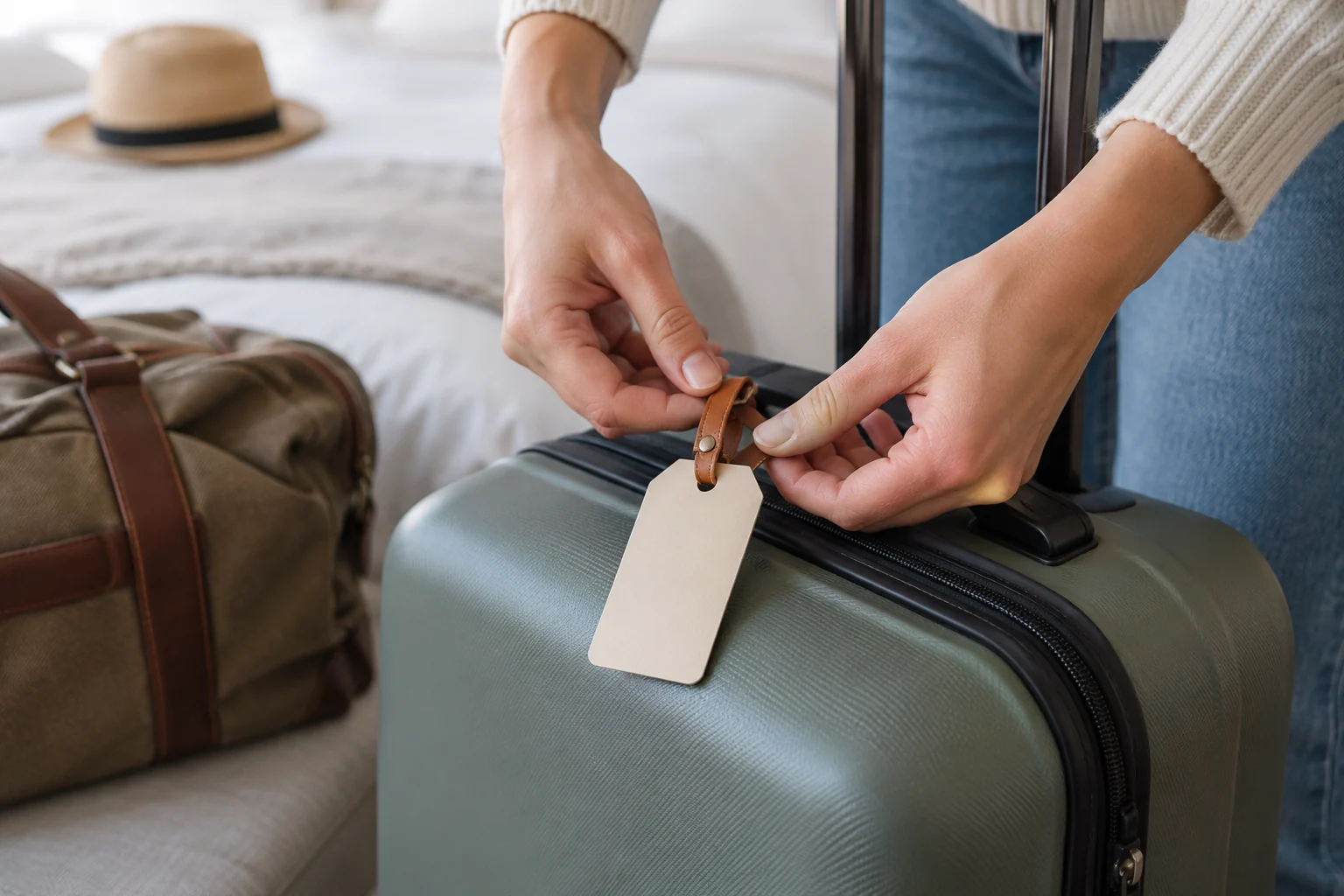
Check attachment and readability
Attach the tag where its design permits and ensure it does not obstruct the handle, wheels or closure. A makeshift knot on a damaged loop is not reliable. Long hanging pieces can catch on nearby baggage, so keep the attachment compact.
Read the text in normal light. Tiny handwriting, worn characters or an outdated card make contact difficult. Remove conflicting information when updating it. An extra card in an accessible inside pocket may help, but does not authorize opening someone else's suitcase to find its owner.
Distinguish your tag from journey documents
The carrier may issue a label, number or receipt when accepting baggage. Ask about your departure's procedure; such documents are not provided everywhere. If issued, check the number and keep the passenger's portion. Your own tag does not replace handover confirmation or create insurance.
Do not remove a current carrier label simply because you dislike its appearance. Ask staff before loading about old transport stickers that could confuse collection. Do not put invented carrier markings or receipt numbers on your own tag.
Use the label during collection and searching
After arrival compare the contact label with model, color and distinctive details. One similar feature is not enough. The suitcase collection guide helps check your item before leaving. Do not photograph and publish other people's contact details.
If the suitcase is missing, give the carrier its description and the label information through an official channel. Contact details help the search but do not guarantee recovery. Use the lost-items guide to prepare a request. Keep some identifying details for ownership checks instead of publishing everything in an open notice.
← Back to the journal