
You have already gotten off the bus and discovered that your backpack, jacket or phone was left in the cabin. The sooner you report a loss, the easier it is to link the item to a specific bus service. However, finding the item cannot be guaranteed: the bus may continue the route, the item could end up in a different place, and storage rules are different. Start with accurate information and the carrier's official contact.
Retrace the last minutes of your trip
Check your bags, pockets and where you unpacked your luggage. Remember whether you had the item at a rest stop, whether you moved it when getting off, and whether your fellow travelers took it. Call the person who was traveling with you if it helps check the facts. Don't waste a lot of time searching randomly when the item may have been left on the departing bus.
Open your ticket: you will need the date, destination, carrier, your drop-off stop and bus service number, if provided. The seat number is also useful, but does not replace the route. If you remember the distinctive features of the bus, provide them without making assumptions about the license plate number.
Contact via official channel
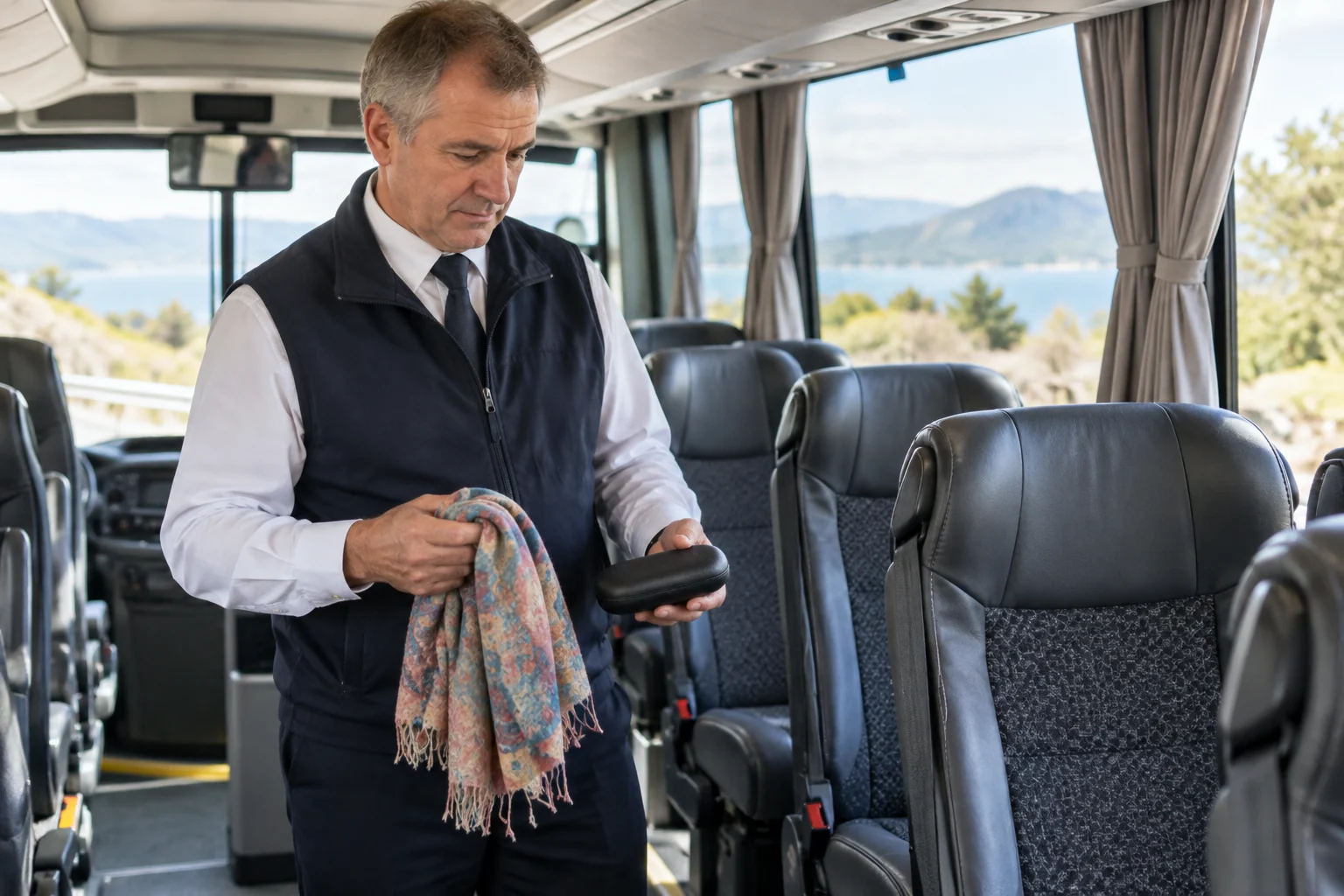
Use the contact from your ticket or order confirmation. The seller can help you find a carrier, but items are usually checked by the carrier or station operator. If the loss could have occurred at a bus station, check with its lost and found service separately. Don't send the same vague messages to dozens of companies.
Write briefly: “I travelled on this route on such and such a date, got off at the stop, and after disembarking I discovered that an object was missing.” Specify a possible location: shelf, seat pocket, under-seat space, or luggage compartment. Ask to register a complaint and tell you when the bus interior can be checked. Do not require the driver to text while driving.
Describe the item so that it can be distinguished
The color and type of bag are not enough if there are several similar items. Add size, material, brand, noticeable defect, keychain, or content that can verify ownership. Please leave some features for verification upon receipt. A photograph of the item before the trip is helpful if you have one.
- Write the date, route, stop and seat number.
- Describe the appearance and likely location of the item.
- Provide a secure contact for reply.
- Save the reference number and agree on the next inspection.
Do not publish scans of documents, residential address and all distinctive information in the public group. To the unknown person who reported the find, first ask verification questions. The requirement to immediately pay for “access to the find” through a random link must be checked with the carrier.
If your phone, documents or card are lost
Searching for things and protecting access go in parallel. For your phone, use the official device-finding and locking tools for your operating system, if they have been configured. Do not visit an unfamiliar person alone based on a location marker; If you suspect theft, contact local law enforcement. Do not share your unlock code or passwords with anyone.
If your bank card is missing, contact your bank through your usual application or official number. If documents are lost, find the official procedure for the host country; abroad you may need to contact the consulate. The specific document and citizenship are important here, so a general blog does not replace individual instructions from the responsible authority.
Arrange collection of the found item
Ask to confirm where the item is stored, when it can be collected, and how to confirm ownership. If shipping is offered, find out the packaging, cost, liability, and available shipping method. Don't arrive at the final station just assuming the item is there.
Upon receipt, check the item itself and its completeness. If someone else is picking up, check in advance about acceptable proof of authority. A found item cannot always be stored for a long time: the period is set by a specific service. Record the agreed upon date so you don't miss receipt.
What helps before your next trip
At the stop, do a short check: phone, documents, bag. Before final disembarkation, inspect the shelf, seat pocket and floor near the feet. Tag your suitcase with a contact tag without unnecessary personal information and take photos of unusual luggage. Our baggage preparation guide helps you separate your cabin items from your suitcase, and our e-ticket checklist helps you keep your documents accessible. A habitual sequence of actions reduces the number of forgotten things better than trying to remember everything at once.
← Back to the journal