
A calmer journey with a child starts with a few clear decisions: where you board, how you sit in the cabin and what remains accessible until the next stop. A long packing list cannot replace checking tickets and departure rules. Establish the carrier’s conditions first, then adapt preparations to the child’s age, journey length and your family’s usual routine.
Check tickets and seating
Ask whether the child needs a separate ticket and seat, how child fares are arranged and which details are required when booking. Do not assume different companies use the same age limits. If adjacent seats matter, confirm them before paying: including an adult and child in one order does not always automatically allocate seats together.
Ask separately about restraint equipment. Installing your own child seat depends on the bus equipment, belts and carrier conditions. Do not assume every car seat will fit. Provide the child’s age and clarify the permitted seating arrangement for this departure. Arrange any special boarding assistance in advance.
For an international journey, check current child document, entry, transit and accompanying adult requirements with the relevant countries’ official authorities. The list depends on the route, nationality and who accompanies the child. This article does not replace an individual check of border requirements.
Pack a separate bag
Your main suitcase may be inaccessible until arrival. Bring cabin items needed during the journey: spare clothes, wipes, water, a familiar snack and age appropriate care supplies. Add a bag for used items and a modest reserve for delays. Divide everything into clear compartments so you can retrieve essentials with one hand.
Do not turn the cabin bag into a heavy suitcase. Accessibility matters more than the number of toys. Choose familiar belongings and food the child normally tolerates; the road is an inconvenient place for food experiments. Follow prescriptions and storage instructions for necessary medicines. Discuss health concerns or motion sickness products with a medical professional.
If bringing a pushchair, provide its folded dimensions beforehand and ask about packaging, storage and charges. Do not assume it automatically counts as free hand luggage. The special luggage guide explains how to agree bulky items.
Organise boarding without rushing
Check the exact departure address and recommended arrival time. Explain a simple sequence to the child: wait together, show the ticket, hand over the suitcase and take your seats. With two adults, agree roles beforehand: one handles luggage while the other stays with the child. Travelling alone, organise documents so you do not have to let the child go while finding the ticket.
Do not leave a child alone in the cabin or beside the luggage compartment. Ask the crew about the exit and stop procedure. Keep a phone with the saved ticket and carrier contact accessible; the electronic ticket guide will help.
Activities and rest on the road
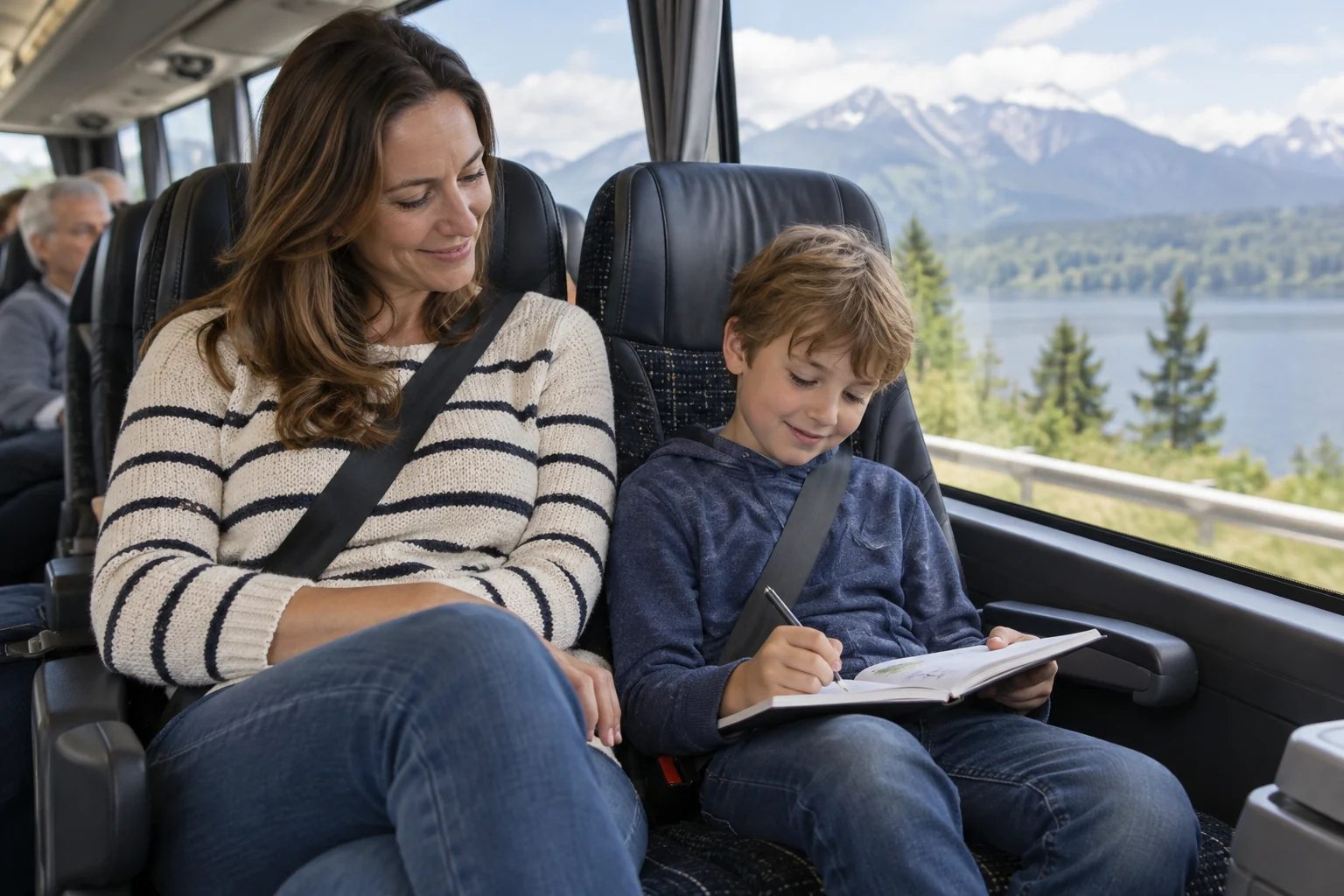
Prepare several short activities: pictures, a small book, a quiet word game or watching the scenery. Gradually changing activities is usually more convenient than producing everything at once. If using video or audio, save it beforehand and bring headphones at a suitable volume for the child without disturbing neighbours.
Do not plan around the child definitely sleeping for the whole journey. Unfamiliar surroundings, lighting and stops can change the usual routine. Allow quiet time and bring a familiar comfort item. While moving, follow the permitted seating arrangement and use belts according to seat design and crew instructions.
At stops and after arrival
Before getting out, establish the stop duration and return time. Do not promise a long walk when the crew announces a short break. Keep the child close and avoid going far to find a shop. If delayed, tell the crew, but do not assume the bus is required to wait.
After arrival, check the cabin bag, suitcase and pushchair before leaving. Plan the journey to accommodation beforehand: after a long trip, an exact address and clear transport option are useful. For a late arrival, read the night arrival guide. Good preparation leaves the family more energy for the journey itself.
← Back to the journal