
A suitcase and a bicycle occupy space differently. “Luggage included” does not automatically mean your coach accepts a pushchair, sports equipment or an unusually shaped item. First obtain agreement for the specific service, then buy the ticket and prepare the packaging. This avoids having to leave an item behind at the stop.
Describe the item with measurements
Tell the carrier what it is, its weight and its dimensions in its transport condition. For a bicycle, use measurements after the required disassembly and packing; for a pushchair, after folding; for skis or a board, use the packed case length. Include protruding parts and protective material.
“A normal adult bicycle” is too vague. Three measurements and a photograph of the packed item are more useful. Ask whether it counts as a separate luggage piece, whether space requires advance reservation and how any charge is paid. Our general bus baggage guide covers suitcases, but does not replace approval for special equipment.
Keep the reply with the ticket. Ideally it should identify the departure date, route, item and permitted transport method. An answer for a different service may not apply because hold space and operator conditions vary.
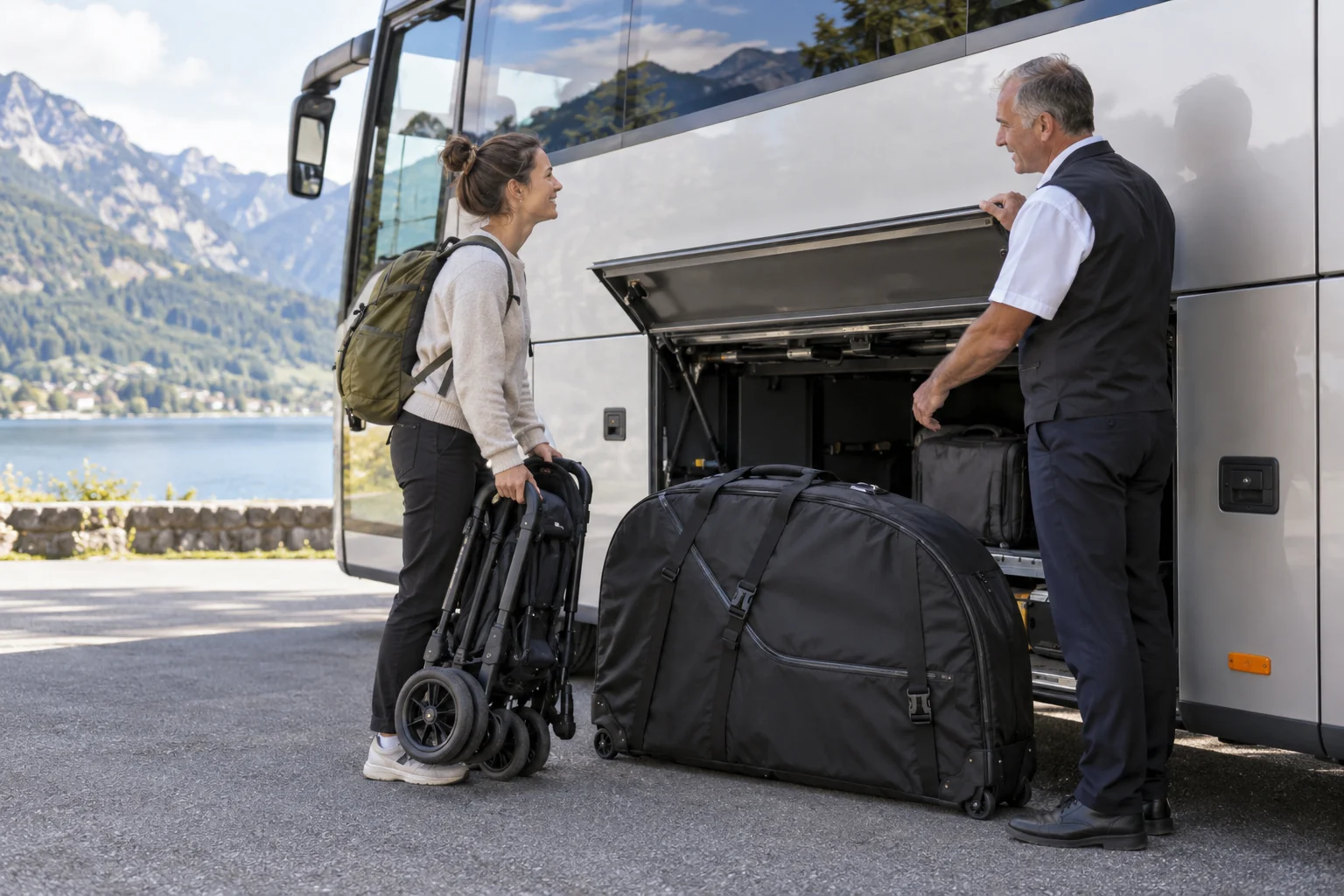
Prepare a bicycle before reaching the stop
Do not attempt unfamiliar disassembly for the first time during boarding. Ask whether the bicycle must be fully enclosed in a bag or box, which parts to remove and whether separate wheels are accepted. Protect parts that could damage adjacent bags and secure moving components. Pack tools so they cannot fall out during loading.
For an electric bicycle, explicitly mention the battery, its specifications and whether it is removable. Battery and electrical equipment conditions depend on the carrier and applicable requirements. Permission for a conventional bicycle does not establish permission for an electric one. Do not conceal a battery or place a damaged one in the hold.
Plan how to carry the package to the stop and reassemble the bicycle on arrival. Its transport configuration may make handling awkward, so arrange help if needed. Check its condition after the journey before riding away.
Pushchairs: access during the journey
Ask where a folded pushchair is stored and whether it can be retrieved at a longer stop. Do not expect hold access while travelling. Pack a separate small bag with your child’s essentials and water. Our travelling with a child guide offers more preparation advice.
Remove accessories that can come loose and place them in a closed bag. Secure the folding mechanism according to the manufacturer’s instructions. Label the cover with appropriate contact information. Ask whether the pushchair is included in the baggage allowance or needs separate arrangements.
A wheelchair used as a mobility aid needs its own procedure. Do not automatically classify it as a pushchair or sports equipment. Our accessible coach travel guide explains which questions to ask.
Sports equipment and loading
A long bag, rigid case or large sports holdall may not fit by shape even when it meets the weight allowance. Ask about length limits, piece counts, permitted contents and protective packaging. Equipment involving cylinders, fuel, chemicals or batteries needs separate checks: available hold space does not mean any contents are allowed.
Arrive with the item fully prepared and your approval saved. Do not obstruct the cabin aisle with a sports bag without staff permission. Discuss loading and retrieval, especially at an intermediate stop. Where different carriers operate your connections, obtain approval for each leg separately.
Photograph the packaging and visible condition before handover if useful. On collection, inspect obvious damage before leaving and ask staff how to record it. Keep documents and carrier details. Compensation procedures are not identical for all items and countries. For belongings left behind, see our lost items guide.
← Back to the journal