
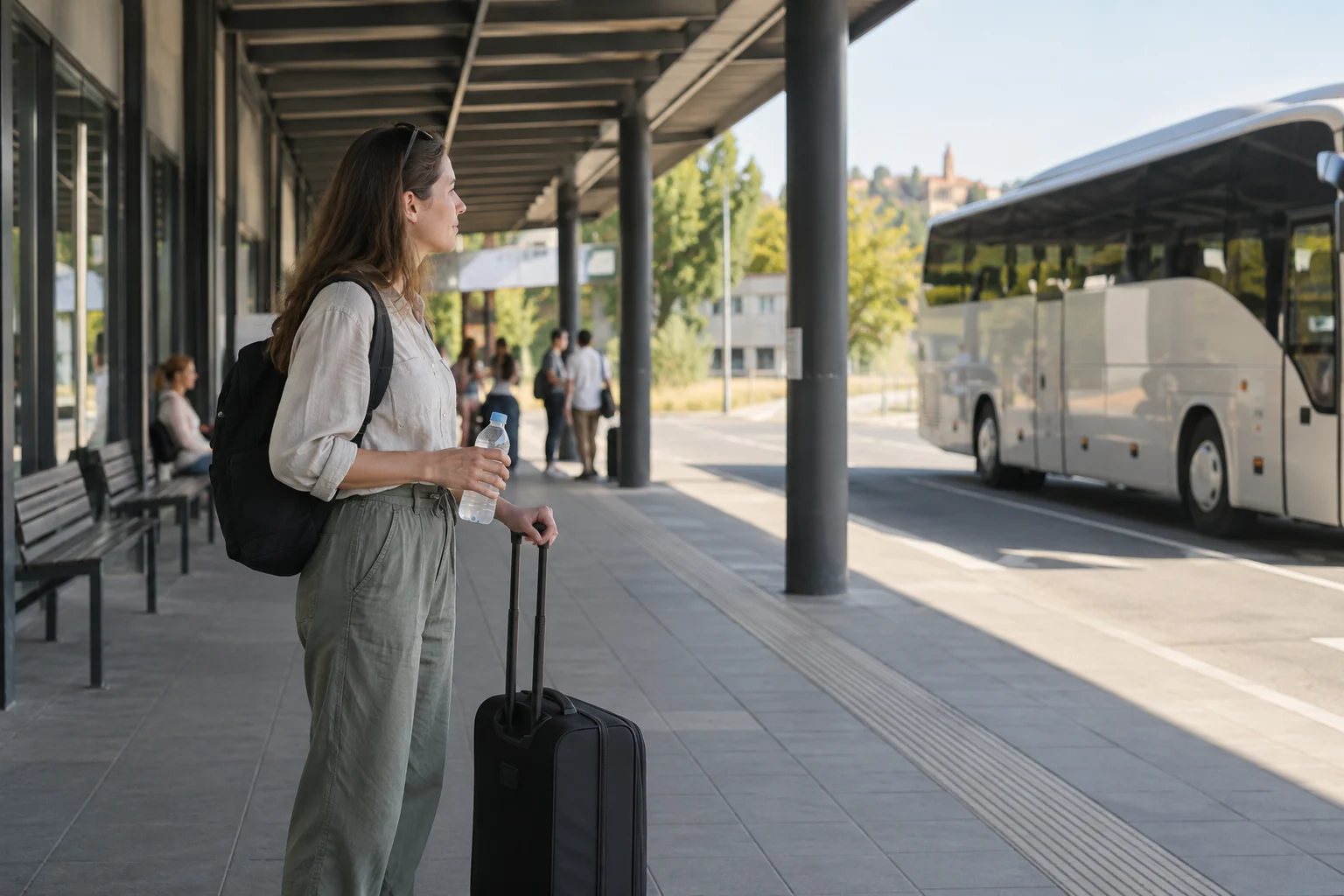
Hot weather makes ordinary waiting less comfortable, especially with a suitcase or child. Preparation begins with the boarding address and somewhere to wait, not an assumption that every terminal has air conditioning. Put essentials in an accessible bag and agree how to receive service updates. Conditions at the stop may differ from a search picture and change on the travel day.
Check the stop and possible waiting place
Establish the exact address, side of the street and bus meeting procedure. Look for an open building or shelter nearby, but verify hours and access using current information. A station marked on a map does not necessarily provide an accessible cooled room, water or seating.
If you want to wait away from the boarding point, find out how to learn that the bus has arrived and how long returning takes. Convenient shade across the street may be far from the correct entrance. Choosing a boarding stop helps connect the address with the actual approach when carrying luggage.
Pack an accessible waiting bag
Prepare water or your usual drink, sun protection and items you personally need. Choose according to your own limits and habits, without experimenting just before departure. Do not count on an open shop, vending machine or free drinks at every stop.
Keep documents, ticket, phone and essentials accessible so you do not open the large suitcase in the queue. Save the route and contacts separately from the network. For personal products or medicines, follow their storage instructions and individual recommendations instead of general chat advice.
Protect belongings and battery without unnecessary actions
Do not leave bags, phone or documents unattended while searching for a more comfortable place. Follow manufacturers' storage guidance for electronics and other sensitive items. Do not leave them somewhere clearly unsuitable for extended waiting, assuming a few minutes cannot matter.
Save battery for showing the ticket and communication. Constantly refreshing a map does not always provide useful new information. Electronic ticket preparation helps open the correct document offline and distinguish it from random screenshots. Keep cables and a small power bank accessible if you intend to use them.
Agree the waiting arrangements with companions
If travelling together, decide who checks messages and who stays with a child or belongings. Do not separate without a clear meeting place. A companion may tolerate conditions differently or need accessible seating or an indoor place; discuss comfort rather than requiring the same plan for everyone.
If delayed, check the service status and next update through an official contact. Checking a delayed bus helps distinguish an absent vehicle from cancellation. Do not plan a lengthy walk based on an approximate time or assume the crew will find every passenger.
Move to boarding under the current procedure
Prepare documents and belongings before the bus approaches, keeping the passage clear. Check the direction with the crew and hand over luggage as instructed. Do not rush boarding by pushing or entering traffic areas: comfortable waiting does not override the terminal's ordinary procedures.
If the waiting conditions no longer suit you, speak to responsible staff about an available option. Describe a specific need for assistance rather than assuming an unknown service exists. Once aboard, check your small bag, water and documents are with you. A good plan allows a different waiting place without losing contact with the departure.
← Back to the journal